
Campsite
Having a comprehensive understanding of the campsites in Hong Kong can significantly enhance your backpacking trip planning. Knowing where to stop for rest or resupply, and what to bring for your activities along the trails, can make your journey more enjoyable and less stressful.
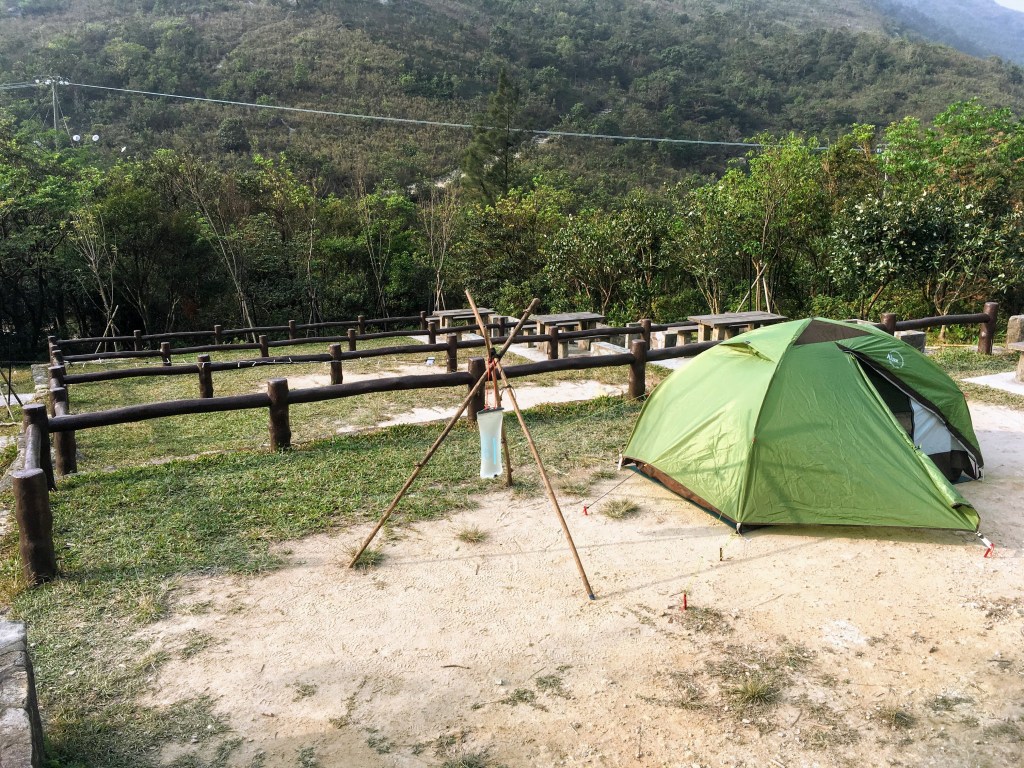
Hong Kong offers a diverse range of campsites, with no standard configuration. This means that each campsite can offer a unique experience, but it also means that your expectations may need to be adjusted depending on the specific campsite.
There are 41 official campsites in Hong Kong, all managed by the government. Some campsites are minimally equipped, offering a more rustic camping experience. Others are located in remote areas, providing a sense of solitude and immersion in nature. Conversely, some campsites are situated close to main roads, offering easy access but potentially more noise. Finally, some campsites are very popular, which can mean more crowded conditions, particularly during peak camping season.
Here’s a brief overview of what you might expect:
Campsite Facilities
Understanding the facilities available at your chosen campsite can significantly enhance your camping experience. Here’s a more detailed overview of the facilities typically found at campsites in Hong Kong, all of which are managed by the Agriculture, Fisheries and Conservation Department (AFCD):
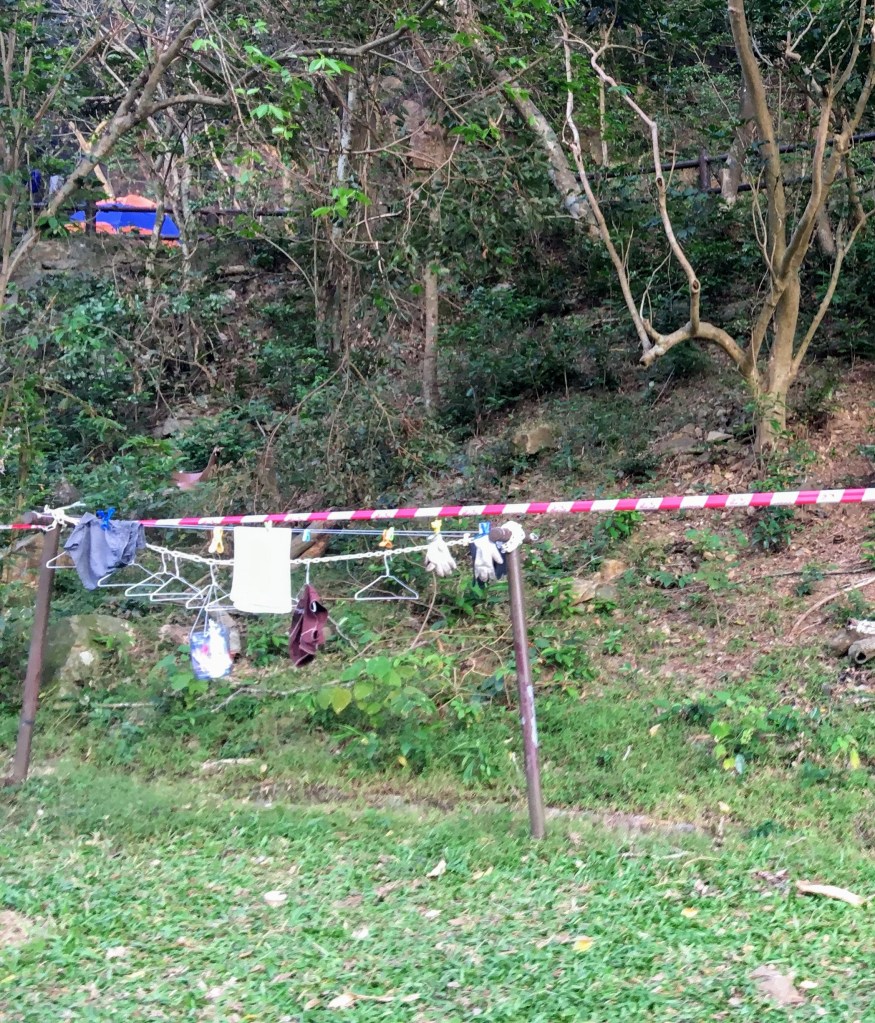
Hanging Posts: These consist of two wires linked on two iron poles. While their primary purpose is for drying clothes, they can be used for a variety of other purposes. For instance, you can hang your backpack to keep it off the wet ground, hang your food bags to keep them away from animals, or use them as anchor poles for your tarp.
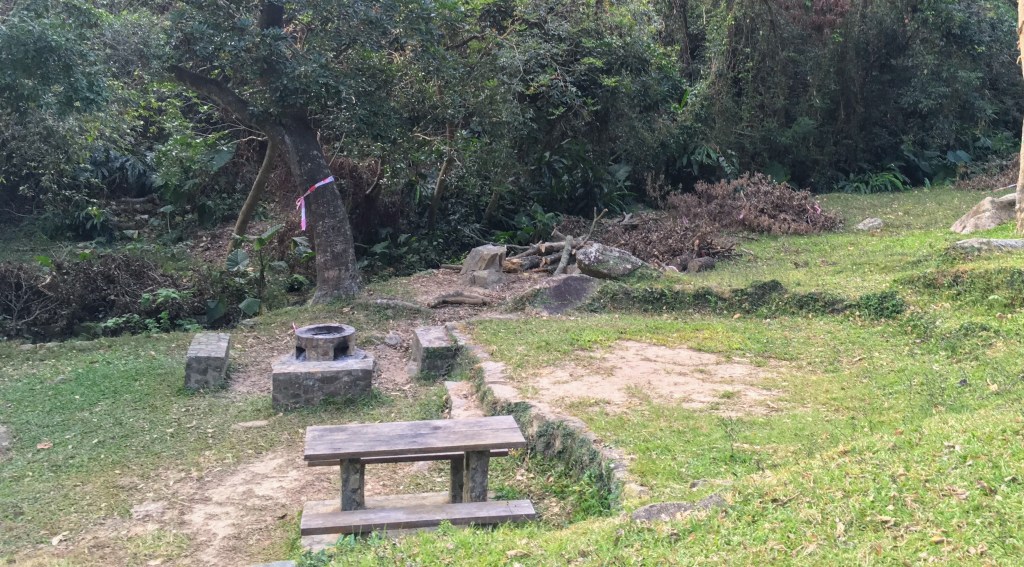
Fire Pit: Fire pits, usually built with concrete blocks and iron bars on top, are a common feature at most campsites. They were originally designed for burning charcoal for barbecues. If you’re planning some bushcraft and campfire activities, you might need to modify them a bit.
Table & Chairs: Not all campsites are equipped with tables and chairs. Having them can be beneficial, especially in areas with a lot of insect disturbance. After a long day of hiking, having a proper place to sit can feel like a luxury.
Toilets: All campsites are equipped with toilets, a sign of civilization indeed! You don’t have to dig a cat hole or carry human waste with you when backpacking in Hong Kong. There are two types of toilets: Dry Toilet Pit and Flush Toilet.
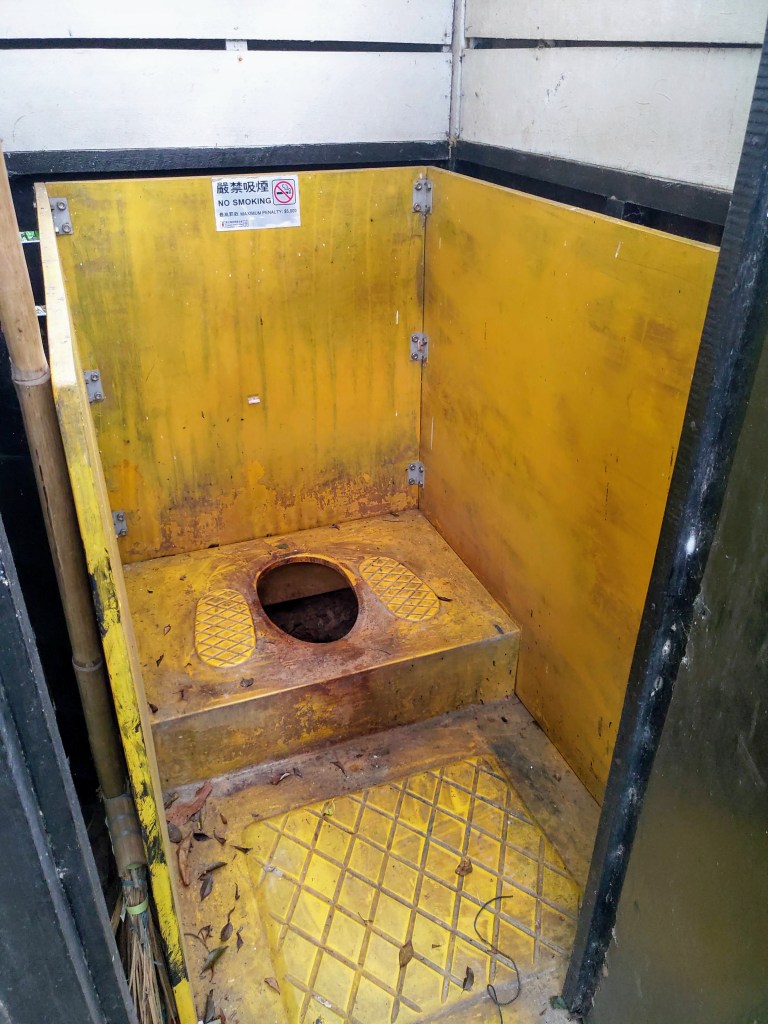
Dry Toilet Pit: This is essentially an enlarged cat hole with a platform elevated from the ground and a shelter overhead. It doesn’t have any water supply or flushing system. It simply lets nature do its job, decomposing human waste naturally.
Flush Toilet: This is the best you can get when backpacking. Water supply and flushing system are available. Most of them are also equipped with other cleaning or hygiene facilities.
Cesspit: A cesspit is a hole for sewage, usually located somewhere near the fire pit. Its main purpose is for liquid kitchen waste, not for human waste.
Washing Sink: A washing sink is equipped in most of the large campsites. It provides a drainage system where you can use detergents or any cleaning agents for any purposes. You can clean your clothing, cooking utensils, or even your shoes.
Shower Room: The shower room is indeed a luxury while backpacking. It is equipped in most of the large campsites. Some designs have individual shower rooms, and some have a common shower room. All shower rooms are built in conjunction with toilets for gender privacy.

 Eco Adventure Hong Kong